
When I was 13, I found a VHS copy of Day of the Dead in a charity shop in Tunbridge Wells.
It was a big box, obviously an ex-rental copy. I remember a green cover with loads of monster faces on it. I’d never heard of the film. The cover was compelling enough for me to take it home.
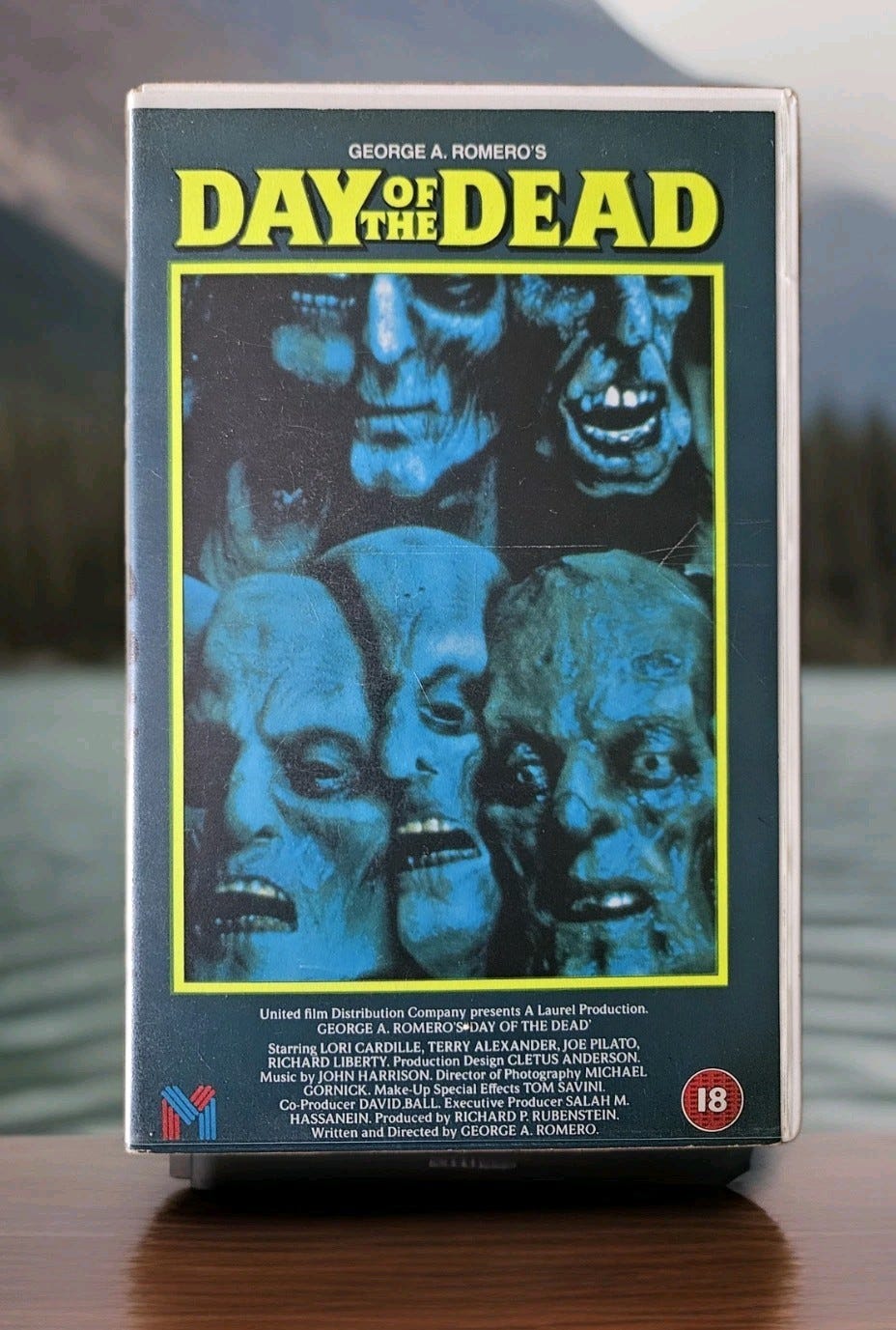
The VHS edition I found in a charity shop in Tunbridge Wells when I was 13.
It absolutely blew my mind.
The world felt completely real. I loved the characters, including Captain Rhodes, who seemed to me the personification of evil. There was something about the film’s joyless, desolate, nihilistic atmosphere that spoke to me at that age. I couldn’t have explained why.
“Joyless, but in an amazing way” is probably still the best description I can give it.
It became one of my favourite films of all time.
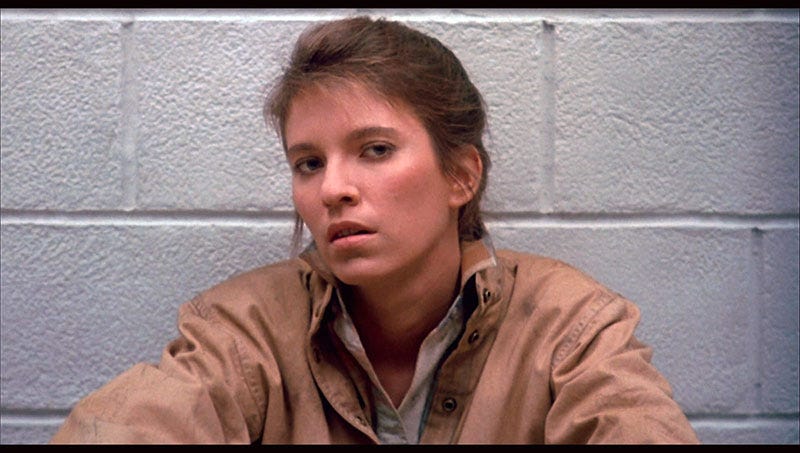
Lori Cardille as Sarah in George A. Romero’s Day of the Dead.
Years later, when I began working on In Search of Darkness in 2018, Lori Cardille was on my list of people I wanted to interview. Her performance as Sarah has a combination of vulnerability and strength that I’ve always found compelling.
In 2019, at the beginning of filming, I flew to New York for a series of interviews, then travelled to Pittsburgh to interview Lori at her house.
She was wonderfully warm. What stayed with me was how much she valued the experience of making Day of the Dead, and the confidence George Romero had shown in her and his decision to cast her.
There’s a family connection to the genre, too. Her father, “Chilly Billy” Bill Cardille, appeared as a reporter in Night of the Living Dead. His role is documented by the film’s original production company, Image Ten.
Sitting opposite someone whose performance had made such an impression on me as a teenager was very special. It cemented my interest in this world.
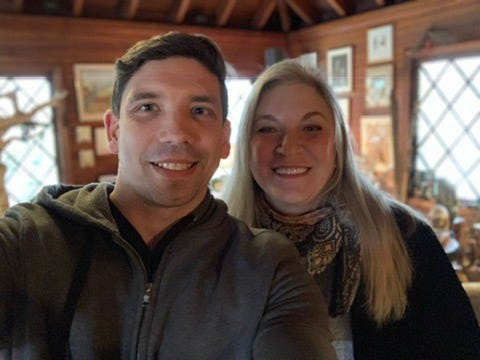
With Lori at her house in 2019, after our interview for In Search of Darkness.
More recently, buying the 4K release of Day of the Dead got me thinking about it again. Working on In Search of Darkness: 70s also meant revisiting Dawn of the Dead. I love Romero, and I love what zombie cinema allows us to explore about society.
Then there’s The Walking Dead. For me, that first season is a masterclass, and the opening episode is absolutely amazing. The world feels real, the characters are compelling, and some of the brutal moments really stay with you.
There are connections with my documentary work there as well. Frank Darabont, who directed the pilot, appears in The Thing Expanded, and executive producer Gale Anne Hurd appears in Aliens Expanded. AMC’s original announcement confirms their roles on the series.
All of this brought me back to a question: how would I approach a documentary about zombie cinema?
A retrospective would be an obvious route. There’s a rich history to explore, and existing documentaries have explored the genre. But I wanted to find a format that excited me—a different way of taking the audience through these films and television series.
The working title is Surviving the Zombie Apocalypse.
The zombie apocalypse has already begun.
And this documentary is your training manual.
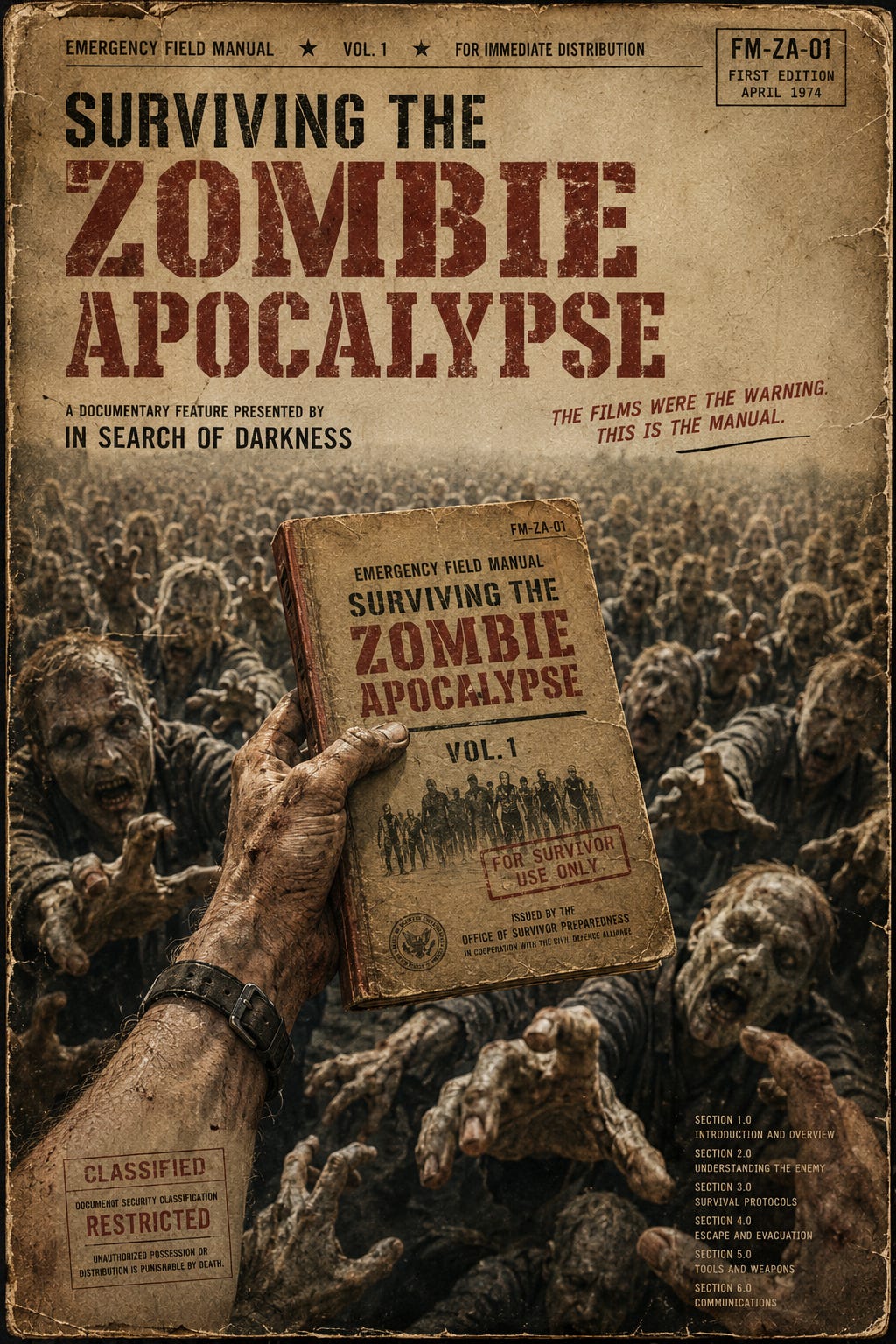
Concept artwork for Surviving the Zombie Apocalypse. Working title; an idea in development.
Please pay attention. Your survival depends on it.
I imagine opening with an emergency briefing. A military officer addresses the audience. Text on screen explains when the outbreak began, how quickly the world was overwhelmed, and why this training programme has been assembled.
It contains everything we know about encounters with zombies, drawing on the evidence available to give you the best possible chance of survival.
You need to watch carefully.
We both know the apocalypse isn’t happening. But the audience agrees to enter that world, and the documentary commits to it.
There’s an element of kayfabe here, the idea associated with maintaining the fictional reality of professional wrestling. What interests me is that shared willingness to play along. Cambridge defines the term here.
With that agreement in place, we can change the purpose of watching.
A scene becomes a case study. A character’s terrible decision becomes a warning. A location becomes somewhere you might consider hiding.
We could investigate which weapons work, which don’t, and which create more problems than they solve. We could examine shelters, escape routes, supplies, and the people you choose to trust.
The history would still be there. So would the interviews, analysis and discussion. But the training manual would give our journey through the genre an immediate purpose.
You’re watching because this information might save your life.
What are we really frightened of?
There’s something inherently terrifying about a dead person being reanimated and wanting to attack and eat you. That alone is enough for a horror film.
But what fascinates me is the mirror zombies hold up to us.
While thinking about this project, I bought a load of books about zombies and zombie cinema. There’s so much to explore beneath the surface of these stories.
One interpretation that interests me is the fear of losing yourself: your body continues, but your personality, memories and ability to make choices disappear. The undead disturb our understanding of identity because they were once us—and could be us again. This University of York research explores that connection.
Then there’s the fear of everything around you breaking down. Someone you love becomes dangerous. Institutions fail. People who need to cooperate turn against each other.
I think a lot of people recognise that feeling of approaching catastrophe at the moment. There’s a sense of living through end times, of societal collapse being somewhere around the corner.
Zombie cinema gives us a way to explore that feeling. It creates an extreme situation in which our ideas about trust, authority, community and survival are put under pressure.
That’s what I’d want Surviving the Zombie Apocalypse to investigate through its training lessons.
Where should you shelter? Who gets to come inside?
Who should you trust? What makes someone a leader?
How do you protect yourself? What happens when protecting yourself puts someone else at risk?
And there’s a question about the training manual itself.
We begin with a military officer telling us how to survive. But should we trust them?
I love Captain Rhodes as a character precisely because he’s such a terrifying presence in Day of the Dead. There’s something interesting about opening my own documentary with a figure of military authority—and then allowing the audience to question that authority as the film progresses.
Perhaps the advice becomes less certain. Perhaps different case studies contradict one another. Perhaps the institution producing the manual starts to fall apart along with the society it’s meant to protect.
I haven’t worked that through yet. But it feels like a possibility worth exploring.
An idea before it’s ready
Surviving the Zombie Apocalypse is one of roughly 100 ideas I’ve got sitting in a Google Sheet.
It’s a rough idea. I haven’t mapped out every lesson or decided exactly how the format would work.
I wanted to share it at this stage because I’m interested in opening up that process. I’d like to talk about ideas while there’s still room for other people to help shape them.
The part that excites me is the possibility of giving a documentary a different sense of urgency. Asking the audience to accept a role within it could create a different way of experiencing the genre, while allowing us to explore what these stories say about humanity.
So I’d love to know what you think.
Does the survival manual conceit appeal to you? What would make it stronger? Which films, television series or questions would you want it to cover?
And if something about it doesn’t work for you, tell me why.
I’m open to constructive criticism, and I’d love to connect with people interested in developing it further.
I think together we could make something really cool.